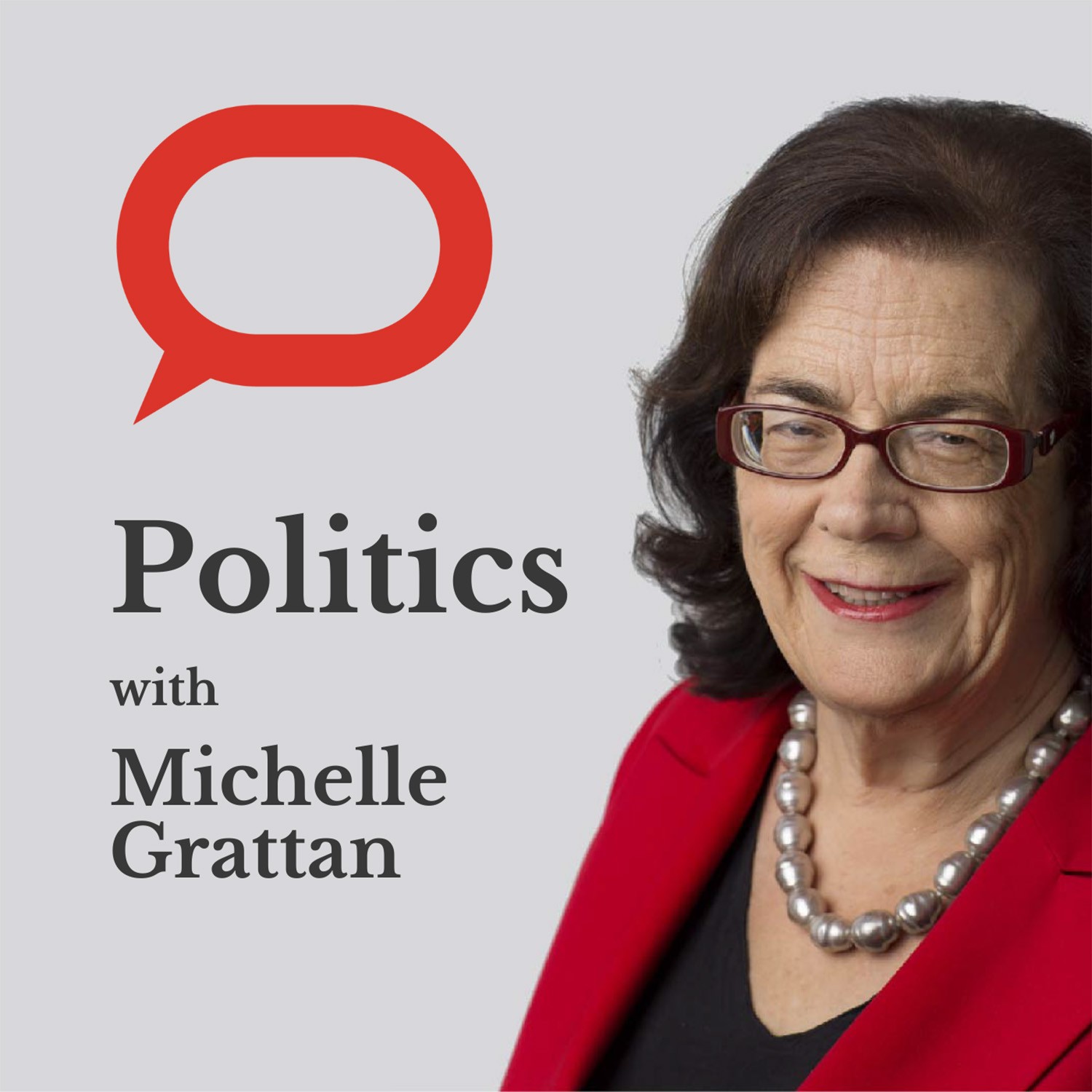
Michelle Grattan, Chief Political Correspondent at The Conversation, talks politics with politicians and experts, from Capital Hill.
Episodes
Dec 15, 2016
Dec 15, 2016
33 min
Ahead of next week’s mid-year economic and fiscal outlook, the government has been hit with the sobering news that real GDP shrank in the September quarter. Deloitte Access Economics’ Chris Richardson offers some context to the gloomy figures.
“Perhaps a better way to describe it is the numbers have been artificially good for a while and now they’re looking artificially bad. The bottom line is that for four years now, Australia’s economy has been growing just a little bit below trend and that’s partly because the boom in China has peaked. China has slowed and that is throwing some challenges our way.”
Richardson tells Michelle Grattan he sees a lot that is missing from the debate about how to strengthen the economy and the budget.
“If you asked the person in the street - they’re aware that there are challenges but they don’t really know what they are and that worries me because getting good policies requires a good understanding from the electorate,” Richardson says.
Richardson foresees minimal immediate consequences if credit ratings agencies downgrade Australia’s triple A credit rating in the near future.
“In the short term, it is absolutely not a big deal. … Part of the reason why interest rates are very, very low is that investors are very, very scared and they want to put their money in super safe places and lending your money to the Australian government is still a remarkably safe thing to do right now.
"So yes, there would be a minor impact on the borrowing costs of the Australian government. I cannot get excited about that in the near term.”
Dec 7, 2016
Dec 7, 2016
13 min
As the curtain falls on the year, one of the most powerful players in the new parliament looks back on his successes. Nick Xenophon nominates whistleblower protections and procurement law changes negotiated alongside the government’s industrial legislation as major achievements.
“The government has agreed to sweeping changes to whistleblower protections in this country. Compensation for whistleblowers will be built into the registered organisations legislation that will apply to unions and employer organisations but most importantly it will also apply to corporations and to the public sector in the next 18 months and we’ve already begun the process on that.
"The other big achievement, just a few days ago was with the ABCC legislation. The government has agreed to procurement law changes which will mean for the first time we’re more in line with some of our major trading partners,” Xenophon says.
Xenophon tells Michelle Grattan that his team will have hard negotiations with the government “but we like to think that if we reach a consensus, a compromise, we do so in good faith which I think is mutually beneficial to both parties”.
“I think the government can expect more of the same and I think the government is prepared to sit down and talk to us about areas of common ground.”
Reflecting on One Nation, Xenophon describes the relationship between his and Pauline Hanson’s teams as “courteous”.
“Even though I made it clear that I don’t agree with them on their views on immigration, on race, on religion. Attacking Islam is not what we do. We think we are a multicultural society and tolerance is the key and obviously we have very different views on climate change. But where there’s common ground - such as issues on procurement, on Australian jobs, on food labelling, on farmers getting a fair go - obviously where there’s common ground we’ll work together.